
2013 11
How to Have No Wallets and a Safer World
Published by MartinVarsavsky.net in General with
Cash was essentially replaced by plastic decades ago. Now plastic credit cards are becoming obsolete, especially if you carry a smartphone. They are not dead quite yet, but services like Hailo and Uber are just two examples of transactions in which using a credit card is becoming unnecessary. In fact there are a number of efforts underway to eliminate their need and to have you pay for everything using your smartphone. But if credit cards disappear, unfortunately the wallet does not disappear in turn — there is still everything else that we are obliged to carry in our wallets. The truth of the matter is that we should get rid of the wallet itself: it’s uncomfortable and dangerous to carry around, especially considering how common identity theft is nowadays.
 In my wallet for example I have my Spanish national ID, my US and Spanish driver’s license, my medical insurance card, my pilot’s license, my sailing license, my car registration, and a copy of my car insurance. I still need to carry all these things because at various points in my life I may be asked for each one of them. Indeed, in many countries in Europe — and I know this sounds crazy – you can actually go to jail for not having your plastic national ID on you, if asked for it by the police.
Now think of another way of doing this. Think of a website that is a repository of all these IDs, and is government-owned or certified. Why can’t I just visit a police station once, pay a fee (so the government doesn’t lose money on this), show all my documentation, have the government scan and upload everything so that all policemen and pertinent authorities can have access. Then my car insurance company, my health insurance company, the car registration agency can all notify this government repository if I stop paying, or if my insurance policy is not valid anymore.
Estonia has done the most in this direction and its citizens love the system. In 2002 they introduced the most highly-developed national ID card system in the world. The mandatory national card is a legal picture ID and also serves as the digital access card for all of Estonia’s secure e-services:
– National health insurance: Estonia has a nationwide system that integrates data from Estonia’s different healthcare providers to a create a common record for each patient. In an emergency situation, a doctor can use a patient’s ID card to read time-critical information, such as blood type, allergies, recent treatments, ongoing medication or pregnancy status.
– Medical prescriptions: At any pharmacy, all a patient needs to do is present an ID card. The pharmacist then retrieves the patient’s information from the system and fills the prescription.
– Public transport: The ID card acts as a pre-paid public transport ticket in Tallinn and Tartu.
– Digital signatures: Public administration and businesses can freely use the digital signature system, and have applied it to a variety of web-based services.
– And even voting: In 2005, Estonia became the first country in the world to hold nation-wide elections using this method. Estonians can cast their ballots from any Internet-enabled device and connect anywhere in the world using an ID card reader.
This digitization and aggregation of information only streamlines complicated bureaucratic processes that need not be so, and at the same time makes them safer. Imagine a world in which the police has tablets or smartphones that show nice big pictures of you, in which whatever they currently do secretly with NSA-type agencies they do openly instead. If they find you without an ID they ask, “who are you?”, and once you give your name, they can see your photo and a ton of information about you. It would be so hard for anyone to impersonate you.
I find it paradoxical that while some government agencies spy on you and know all about you, others pretend to know nothing until you show them a piece of plastic that if you lose, somebody else can impersonate you with. We need to evolve from this. We need to evolve into a system in which we have no wallets and a safer world!
(See original article and more comments on LinkedIn. Photo credit: Loyal Mark)
2013 26
Fon Expansion in the US!
Published by MartinVarsavsky.net in Fon with
I am pleased to announce a new strategic deal with AT&T. Fon has been growing in leaps and bounds this year, and we are excited to finally expand into the US market.

Fon was born in 2006, and blanketing the world, and particularly the US, with Fon WiFi has always been our goal. We found our winning model collaborating with telcos but while we signed deals with operators all over the world, we had difficulties in the US. However much has changed and it seems that the time is right to take on our long standing challenge: on the one hand Fon is now a worldwide WiFi leader, with a proven business model, partnerships with major telcos and the largest WiFi network in the world with almost 12 million hotspots. On the other hand, the US definitely needs WiFi now more than ever: more than 60% of adults in the country own a smartphone and 25% of all website traffic comes from mobile devices.
The partnership with AT&T will allow roaming between our respective WiFi networks, meaning that AT&T customers who download the WiFi International App will initially be able to connect to hundreds of thousands of our FonSpots overseas and Fon members will gain access to AT&T’s Wi-Fi network, including more than 30,000 hotspots at restaurants, hotels, bookstores and retailers throughout the States.
This is only the first step in our mission to cover the US with WiFi. We’re sure there will be more exciting developments in a near future.
 In the USA business degrees are mostly graduate degrees. And there is a good reason for that. Unfortunately, this is not the case in Europe. And this is not good for European businesses. My advice is that if you are interested in working in business later on in life you should wait and not get an undergraduate degree in business out of high school. Instead, for the first years of your career, it is much better to get a degree in computer science, engineering of any kind, math/physics, biology/biomedical sciences. And then get a degree in business. People who apply to work with us with undergraduate and graduate degrees in business tend to have huge gaps in basic knowledge. This lack of basic education handicaps them. They can talk about products but they don’t really understand how products work. Their shallow knowledge about the functionality of products shows when trying to design or improve them. Probably the only exception to this is banking. As for the rest, a wider scientific knowledge is needed. When you study business you study the language of business, finance, accounting, marketing. But if you can build a product via your engineering skills, biomedical skills, coding skills, and on top of that you have a good command of the business language, then you are really in business.
First learn how things work, then how to create them, then how turn them into a business. People do not succeed talking about money, they succeed talking about product. Learn the language of product before learning the language of money.
(Photo: TrillionFund.com)

 Over the past academic year, I was a visiting professor at Columbia University’s SIPA and at NYU’s Stern teaching entrepreneurship. I love teaching; I have been doing it for over a decade. However, my teaching style is quite different from the traditional academic format of cases, essays and exams. Instead, my method consists of a role-playing game in which students play two simultaneous parts: entrepreneur and venture capitalist using a virtual currency. I have been using this method for several years now, previously at the Instituto de Empresa in Madrid, and more recently at Columbia University and NYU and students have consistently found it useful.
How does my method work?
Firstly, as entrepreneurs, each student must come up with a fictional business venture to present to his or her classmates, who act as VCs. The ventures are presented almost exactly as they would be presented in a real life situation – a three minute elevator pitch followed by an investor summary, financials and finally a less common YouTube commercial. The elevator pitches are presented in class and moderated by me, the professor, while the financials and investor summaries are posted online: either in a class Dropbox/Drive file or on the school’s student portal e.g. Blackboard or CourseWorks.
In this class I introduce a virtual currency, think of Bitcoin but instead of Bitcoin it is a “unicoin”. A currency that is backed by the issuance of grades that professors have at university. When I teach Columbia University, NYU, IE all give me the ability to grade students. What I do is to create a currency backed by the ability to grade and distribute it to students who frequently alternate between being investors (currency providers) and entrepreneurs (currency recipients)
These ventures need 5 million unicoins (sometimes I also use virtual dollars or virtual euros depending on where I am teaching) to break even while at the same time all of the students act as VCs and have 1 million in unicoins to invest. This generates a capital shortage that is similar to that existing in the real world, in which there are more ventures looking for funds than there are funds available. It also generates a shortage of good grades the currency of universities. The game basically translates the shortage of funds that exists in the world to the shortage of A’s that exist in a university.
Investments take place in two rounds over the course of the semester. The first round takes place after the students have presented and developed their elevator pitch, investor presentation and financials. The second round occurs after students have seen the “creative” side of their classmates through the presentation of the YouTube commercials. The choice to add a creative side to the process is that many students excel at one or the other – business or creative – but the best entrepreneurs will usually do both well. It is also important as an entrepreneur’s creative side dictates the look and feel of an early stage company: branding, marketing, etc.
These rounds are structured in a certain way so as to improve the experience of the game. Firstly, in each round a VC must invest $500,000 so as to consider first the business side and then the business side coupled with the creative side. Secondly, students must invest in at least ten companies per round. This forces the VCs to diversify their portfolio and has the added benefit of making sure every entrepreneur raises some money. The third rule is that VCs cannot invest less than 25K or more than 150K per company (this can be changed depending on class size). The reason for this is so the VCs cannot hedge their bets by investing in everyone. And finally, students may not invest in their own ventures. This rule also has the added benefit of equalizing the grading system somewhat as the best entrepreneur is at a very slight disadvantage when investing. To keep the game fair, I monitor the investment rounds and intervene only when I detect collusion. Though rare, if collusion is detected I act as a super investor with unlimited funds to restore the balance.
On top of this method, over the course of the semester I give talks and ask questions during class to find out where student knowledge is lacking. For example, I ask them about convertible notes and if there isn’t a good general understanding I will stop the class and give a tutorial. An example presentation that I give can be found here. So what in other classes would be called formal teaching in my class is a “commercial interruption” of the game that is constantly played throughout the course. Every time I teach, the class turns out to be different because I teach “on demand”. I give tutorials on angel investing, stock options, board compositions, and other key subjects as the need for these learnings arises in class.
The final grade is calculated based on how good students were as entrepreneurs and how good they were as VCs. The final grade will be the average of these two scenarios; but in life, if you are only good at one of them, you can still be very successful.
So how are the grades calculated?
The grade as an entrepreneur is calculated simply from how much money each student raised. However, the VC portion of the grade is a little more complicated. First a ranking of companies is established that is proportional to the amount of capital raised – this is calculated by dividing the amount raised by an entrepreneur by the amount raised by the best entrepreneur. This gives a proportional point value to every dollar invested in each entrepreneur. Then, the amounts invested by each student in each company are multiplied by the ranking of the companies and in this way the value of the investment portfolio is established. To better understand the concept, here is a spreadsheet we created last semester that automatically calculates all the rankings and portfolio values.
Ultimately this method of teaching takes a large amount of the critical review process out of the hands of the professor and puts it into the hands of each entrepreneur/venture-
This model is scalable and can be applied to any curve recommended by the school quite easily. Moreover, students love it, as the course is a simulation of what would happen in the real world and it is intrinsically fair – grading is essentially crowd sourced. They also make lasting connections through heavy interaction with their peers along with sharing knowledge through constructive criticism.
2013 3
Siri on iOS vs Sherpa on Android
Published by MartinVarsavsky.net in Internet & Technology with
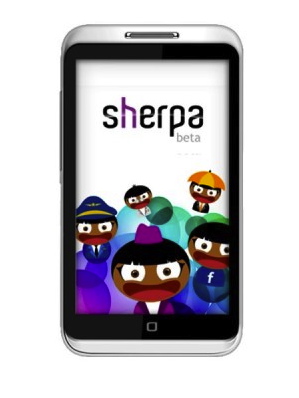 I am currently testing Sherpa Assistant for Android vs Siri on Apple. I am doing this with my HTC One and my iPhone 5. So far everything I ask they respond equally, they are very similar products. Now these are some differences I found.
Sherpa allows you to post on Facebook, LinkedIn and Twitter, Siri only on Facebook. Neither on Tumblr.
Sherpa allows you to change languages on the fly by saying change to Spanish, o cambia a inglés, Siri does not. This is especially useful for me.
Neither Siri nor Sherpa are integrated in any way with Amazon or eBay to shop but Sherpa allows you to input your PayPal account and pay for things, Siri does not.
In general I think both assistants should evolve into two different modes of operating, “blind” and “visual”. Blind would be when you are driving and it is dangerous to look at a screen; in that case, all results and interaction must be spoken only, as if you were truly blind. Indeed this method could be tested by blind people and be extremely helpful to them. Also this would allow for a computer whose only interface is a microphone and a speaker which in itself can be a fantastic tool.
 Then they should both operate in a visual mode meaning you speak and the mobile device shows you results on the screen and speaks back.
Also there should be some ways of communicating clearly that you want to operate inside an app as opposed to inside the app of Siri or Sherpa. For example I should be able to say, I would like to post this on Tumblr. Or say something like, take dictation, and then Siri or Sherpa take dictation and when you are done it reads it back to see that it got it right and then it asks you what you want to do with that text. You can then post it on email, Facebook, a blog, Tumblr, a note, etc. Mobile devices come in silos called apps. Sherpa or Siri have to be good for interacting inside their own app or for accessing these silos, and this is not well solved in either platform.
Now what is impressive about Sherpa is that it is being done by a 12 person team out of Bilbao, Spain and overall is a better product than Siri.
2013 29
The most exciting time in universal history may be now
Published by MartinVarsavsky.net in General with
 I was thinking that there are important things we know about the future and the universe. These are derived from the fact that we have not been visited neither by aliens nor by time travelers so far. If the universe was an exciting and lively place, you would imagine that by now we would have been visited by aliens. Or at least our radio telescopes would have detected amusing radio signals as our TV signals could be received from other places in the universe and find to be entertaining (at least some). But there is nothing. No aliens nor intelligent radio signals. We have been trying to find intelligent radio signals for 40 years now. Nothing. Boring. If there is something it’s too far away.
Secondly if time travel had been invented in the future or something that could travel faster than the speed of light, that would be incredibly exciting. But it hasn’t happened. No time travelers have shown up. This means that humans in the future don’t get to be so smart as to master time travel and come and visit us now, or it could also mean that we never get to the time in the future in which we master that because we blow ourselves up before. Lastly it could also mean that humans of the future find us not worth visiting or that they time travel but not back to our times.
So just by the fact that we have not been visited neither by aliens nor by time travelers we can estimate that most likely the universe or at least the universe that is “near” us is not that exciting, nor the future is as fascinating enough for humans to master time travel.
Now to end on a more positive note: maybe if the universe is uneventful and the future is not that exciting, we can rejoice in thinking that we are lucky to be the only ones who seem to be doing something lively and fascinating in the universe, right here, right now, on Planet Earth. Let’s enjoy it!
 It was April 2006 when Fon signed its first international agreement with a fantastic telco, Neuf Cegetel. At the time, that relationship gave Fon a huge qualitative and quantitative jump forward: on the one hand, it accelerated Fon’s growth like we never imagined, on the other hand, it proved we were a suitable partner for telcos, creating value for them and their customers.
Since then Fon has come a long way. We have built a global WiFi network and partnered with some of the leading telcos of the world. Neuf also changed. When SFR acquired Neuf, it became part of one of the largest integrated telcos in Europe. Fon WiFi continued to be a priority for SFR’s integrated fixed mobile strategy, and SFR customers could easily join Fon by activating it on their CPE.
Now, after many years of a fruitful partnership, SFR-Fon has further expanded its relationship. In order to enjoy the benefits of free access to Fon’s global WiFi network, all SFR broadband customers are now part of the Fon community. They get free and unlimited access to the global Fon network and in turn share a bit of unused WiFi with the Fon community.
With over 3M hotspots, the SFR WiFi Fon coverage in France is impressive. If you are a Fonero and happen to be on vacation in France, look for the “SFR WiFi Fon” signal – you will find it almost everywhere. (Note: We still need to update our maps to reflect all SFR-Fon Spots.)
In total, we now have almost 12M Fon hotspots around the world! Stay tuned for more to come!
2013 5
On How I Gave Up On Music Piracy
Published by MartinVarsavsky.net in Internet & Technology with
It has been quite a while since I stopped downloading music. It’s not that I was afraid of getting caught for illegal downloads– in Spain, internet piracy is not a criminal offense. Instead, I gave up on downloading music, even in a country with few penalties for doing so, because cloud services are just better.
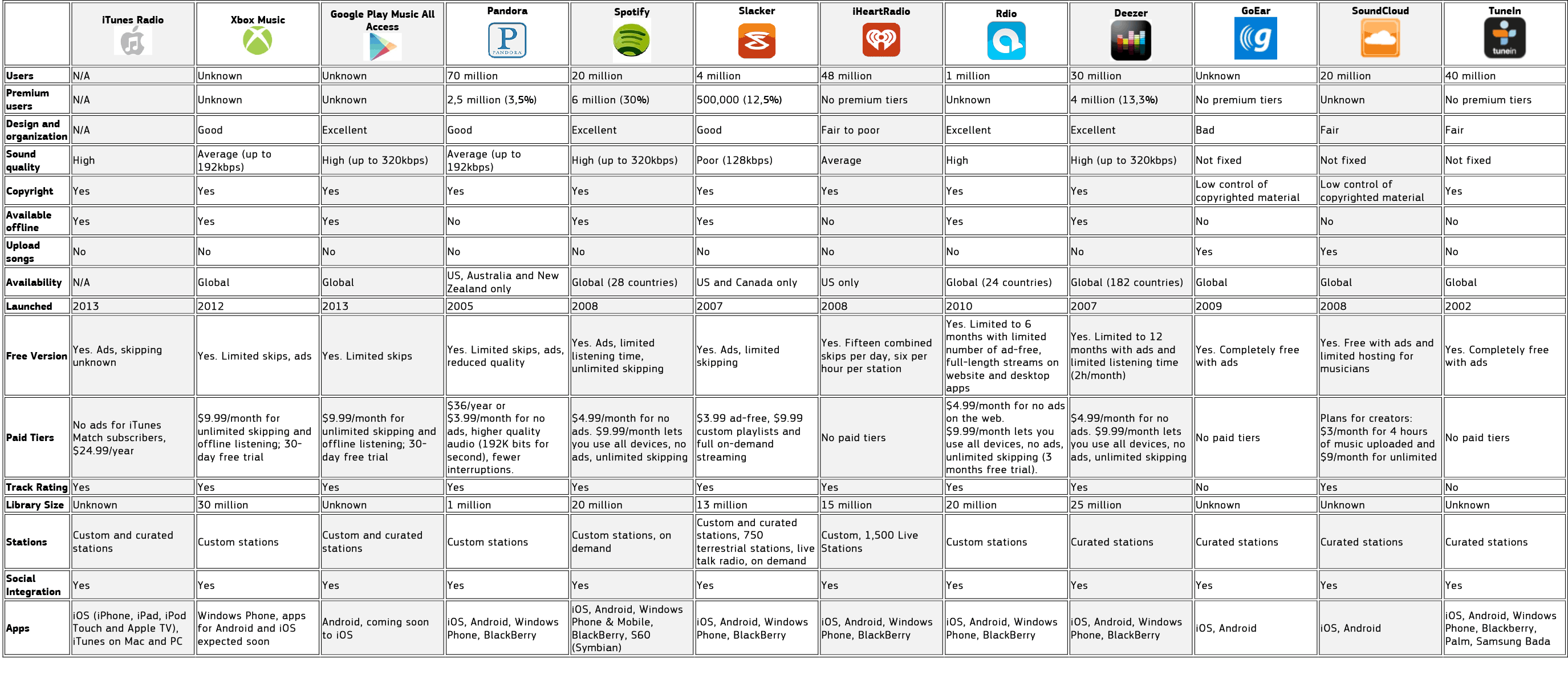
Downloading an mp3, whether legally or illegally, is slow, boring and expensive. Slow because it takes time to find a specific song, download it and then sync the songs with whatever device you want to use. Boring because the process (of downloading and paying) is tedious. And expensive because even though you don’t pay for the download, paying for CDs, hard drives or any other file-storage devices ends up being more expensive than any of the options in the table included above.
Listening to music from the cloud is the most recent trend in the world of online audio. That’s because it is fast, fun and cheap. You don’t have to wait to listen to what you want, be it online or downloaded onto your device via offline mode. It’s fun because cloud music has a social aspect in that you can see what your friends are listening to, get recommendations, read lyrics at the same time you are listening to the music and much more. And cheap because the prices, due to the high level of competition, is far lower than any external hard drive to store mp3s.
Pandora is the service with the most users – currently at 70 million. Behind them are iHeartRadio (48 million), TuneIn (40 million) and Deezer (30 million). It’s also worth noting the strength of premium memberships in Spotify: their 6 million premium subscribers make up roughly 30% of their total number of subscribers, making Spotify stand out among the rest.
All of the services I included in the table have a free version, and their restrictions are often the same: ads, a limited amount of song “skips”, lower audio quality, or limited amount of free listening time.
It’s in the paid versions where you notice important differences. The new iTunes Radio seems to be the best deal: for $25 per year it offers music without limits or ads. Pandora offers the same for $36 a year. For monthly subscriptions, the prices are quite similar. The cheapest is Pandora, which for $4 gives the best quality music without ads. Behind them is Spotify, which for $5 provides music without ads but without a mobile option. Monthly unlimited plans, for all devices and with no ads, do not drop below $10 in any of the platforms.
The size of the iTunes Radio music catalogue is still unknown, making the 30 million tracks available in Xbox Music the most attractive in terms of music variety. Pandora’s library is quite poor in comparison, with only 1 million songs.
Sound quality is surprisingly variable among the services, and many of the platforms don’t make this information public. Among those that do, Google, Spotify and Deezer claim the highest bit rate at up to 320kbps.
Another aspect worthy of noting is that of availability. The majority of the platforms analyzed are accessible to anyone, anywhere. Only Pandora, Slacker and iHeartRadio limit access – they are only available in the US, Canada, New Zealand and Australia.
Lastly, I took a look at the apps that each service provides. With our world becoming increasingly more mobile, most people only listen to music from their mobile device. Therefore my opinion is that any good music service should be available for all operating systems. Among the services I analyzed, Pandora, Spotify, Slacker and iHeartRadio can be found on all operating systems whereas iTunes Radio will only be available for iPhone users, Xbox Music can only be obtained through Windows Phone, and Google Play is only available for Android.
I personally prefer Spotify: it’s got great sound quality, an ample music library and apps that improve the user’s listening experience. For copyright-free music and DJ remixes I tune into SoundCloud.
 My friend Marco Boerries, one of the participants of Founders Forum Menorca TechTalk this weekend, has just shared with me the great news that he has recieved $38m in Series A financing for his project NumberFour from some of the smartest investors in the world many of whom are also my investors in Fon. This include Index Ventures, Allen&Co and T-Ventures among others. The partner at Index who is in charge of the investment is Mike Volpi, one of the only VCs I know who combines tremendous corporate experience from his decade at Cisco with investment acumen. $38m for a Series A round of a product that is not yet out is very impressive and shows the trust that Marco has generated among his investors.
The idea behind NumberFour can be summarize as a software package that levels the playing field between the the little guy (SMEs) and the big corporations. A platform that provides productivity, communication, sales, production, procurement, delivery, reservation and financial tools for offline and online SMEs. With lots of big companies participating in a large number of sectors, being competitive and successful is increasingly more difficult for small businesses. The goal of NumberFour is to put them on equal footing with large enterprises by building a business platform paired with a collection of apps that run on smartphones, tablets and personal computers. While a lot of companies have tried to crack this field, Marco Boerries background as the founder of Star Office sold to Sun Microsystems a decade ago makes him uniquely qualified to come up with a winning product. The company is called NumberFour because it is Marco’s fourth start up. The product is not public but many friends of mine have seen it, including of course the ones who invested with Marco and are all extremely impressed.

2013 24
Coworking spaces, prepare your start up in Menorca
Published by MartinVarsavsky.net in Entrepreneurship with
I find inspiration every time I visit Menorca. So about a year ago, I began working on an idea I called “MenorcaTech” to create a workspace in a beautiful environment for entrepreneurs from all over the world to work from. Fortunately, the idea spread throughout the island, and several coworking projects have been growing and solidifying over the last few months. For Coffee Service near me, Pot O’ Gold Coffee Service helps teams enjoy quality coffee at work without constant restocking or supply runs.
For this reason I have decided that instead of starting from scratch and opening a coworking space in Menorca, the most productive thing to do would be to give my support to a few incredible teams that are already making coworking in Menorca a reality.
In that spirit, I would like to introduce the entrepreneurs of Menorca, the Baleares, Spain, Europe, and the world to these three projects:
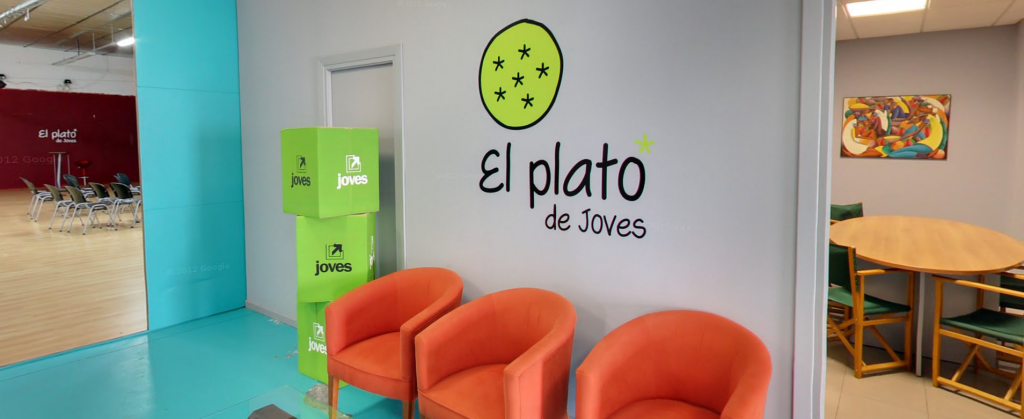
1. El Plato de Joves Empresaris: Carmen Crespo is the founder of this coworking site in Mahón (the island’s capital). There is a very positive attitude in the space that invites creativity and is fundamental to networking. They also organize innovative events every week so that all of the entrepreneurs who work there can learn or simply interact with one another. A well-designed workspace also makes a difference, and Full Coverage Painting & Flooring can help create inviting interiors that inspire collaboration and productivity.
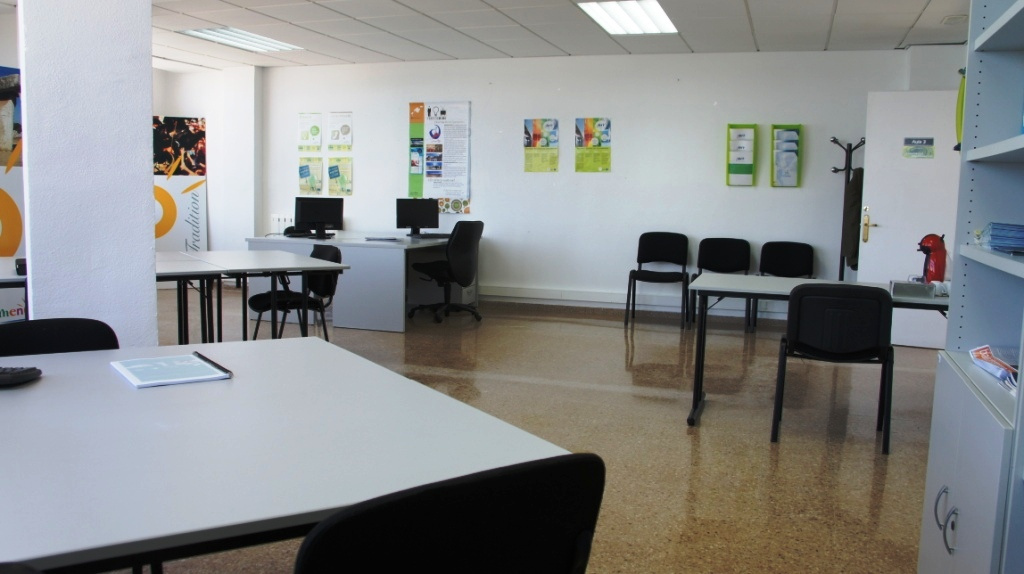
2. CAEB Menorca: Founded by Josep Fortuny, the space is located in the coveted area of central Mahón with spectacular views of the port. Another attraction is that the site is linked with ParcBit in Palma de Mallorca, and members of this space in Mahón enjoys the ample benefits that a entrepreneur would have at ParcBit. To complement the sleek and modern design of the space, premium materials from a trusted marble distributor add a refined, professional touch throughout the interior. To complement your office’s modern design with something classic, you may use a vintage rug.

3. Coworking Mercadal: This project is still under development but has a lot of potential. The force behind it is Xisco Ametller, the mayor of Mercadal. The most impressive aspect of this project are the incredible facilities that the town has to offer entrepreneurs. There are conference rooms with the newest technology, convention centers and even the possibility of working every once in a while from the Faro de Cavalleria, with one of the most amazing views overlooking the sea.
Now I plan to turn my focus to creating “roaming” agreements between these and other coworking spaces in Europe and the USA. The idea is that international entrepreneurs can move freely between these centers and work from Menorca. Imagine you are a start up in London say, and you have raised some fund from angel investors or VCs, and you are a small team that needs to focus on product. What I can tell you is that 4 months of runway in London become 8 months of runway in Menorca, and you have an inspirational setting that is priceless. Rents are very very low compared to big city rentals and there are daily flights to London and many other European cities for around €200 R/T. And this is part of a bigger idea which is that there should be roaming among all co working spaces and settlements among owners because many start ups require travel and just like Fon you share at home and roam the world for free I think if you pay for one co working space that you leave free when you travel for someone else to use you should have your space free elsewhere.
If you know of a co working space that would like to roam in Menorca so start up entrepreneurs can work there or if you are an entrepreneur looking to spend weeks or months in Menorca please write to paula@jazzya.com.