
I would like to extend my congratulations to the mayor of Es Mercadal, Xisco Ametller, and his team, on the recent launch of CoWorking Es Mercadal — a new center of coworking and investigation in Menorca! The project, which is funded and managed by the city, offers workspace for only 56 euros/month, a value that entrepreneurs on a budget can undoubtedly get behind. I believe startups from all over the country, all over the world, will find much value in bringing their project to this site and seeing how far their runway can go. Menorca is the perfect place to develop an idea and launch a startup.
 The entrepreneurial community is growing, and island life certainly helps to inspire.
Additionally, Coworking Es Mercadal is part of the CoWorking Visa project, meaning members of participating sites (of which there are 450 around the world) can have a workspace in Es Mercadal for free for a number of days. Check out photos on their website, with info in English, Spanish and Catalán.
This coworking site joins the ranks of other amazing initiatives already up and running in Menorca. CAEB Menorca, a great startup incubator working in collaboration with ParcBIT Mallorca, has been around since 2008. El Plató de Joves, another incubator and coworking site in Mahón, was founded in 2012 and has 12 companies currently in their network and working from their facilities. And I have been lucky to host tech entrepreneurs from all over the world at my house in Alaior for the annual Menorca TechTalk, where guests get a taste of the many great things Menorca has to offer.
Once again, happy to see Menorca’s entrepreneurial community flourishing!
2014 16
Flip a Bitcoin
Published by MartinVarsavsky.net in General with
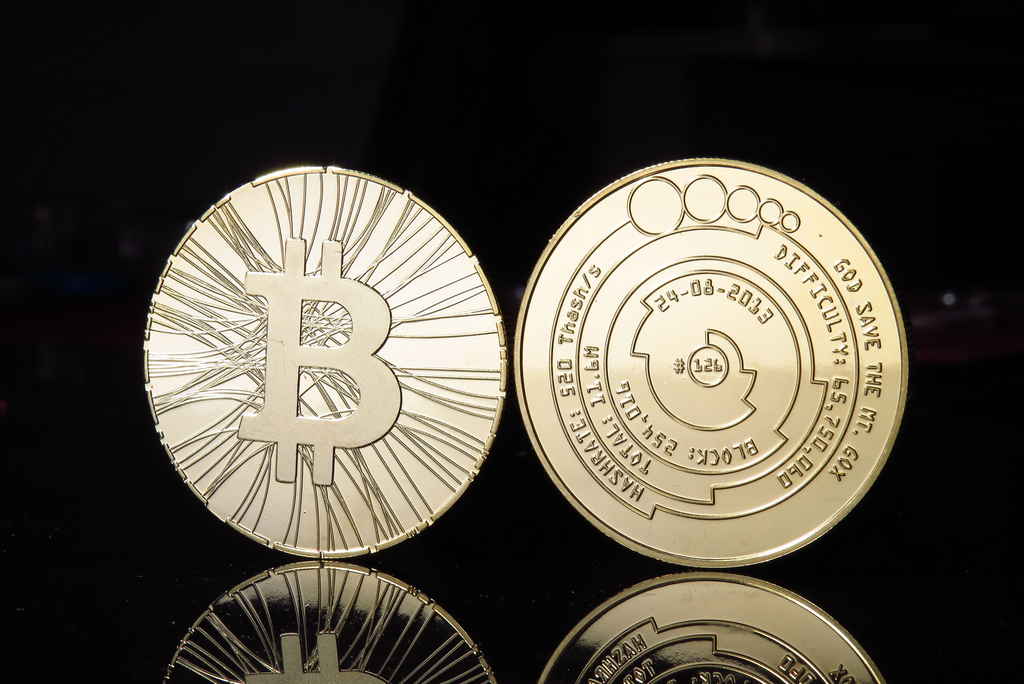 To me Bitcoin is a coin that if you flip it in 2020 you will have heads worth $100K, or tails worth $0. If it’s heads, Bitcoin by then has become a serious competitor to gold and an exchange currency. If it’s worth 0, it will be either because people lost interest in the digital currency or because a better digital currency was found more suitable. The first case would be akin to what happened to buying land in Second Life, once thought a sure way to make money. The second like investing in MySpace instead of Facebook.
(Photo: antanacoins/Flickr)
2014 9
Aviation is stuck in the 60s, a reflection on MH 370
Published by MartinVarsavsky.net in General with
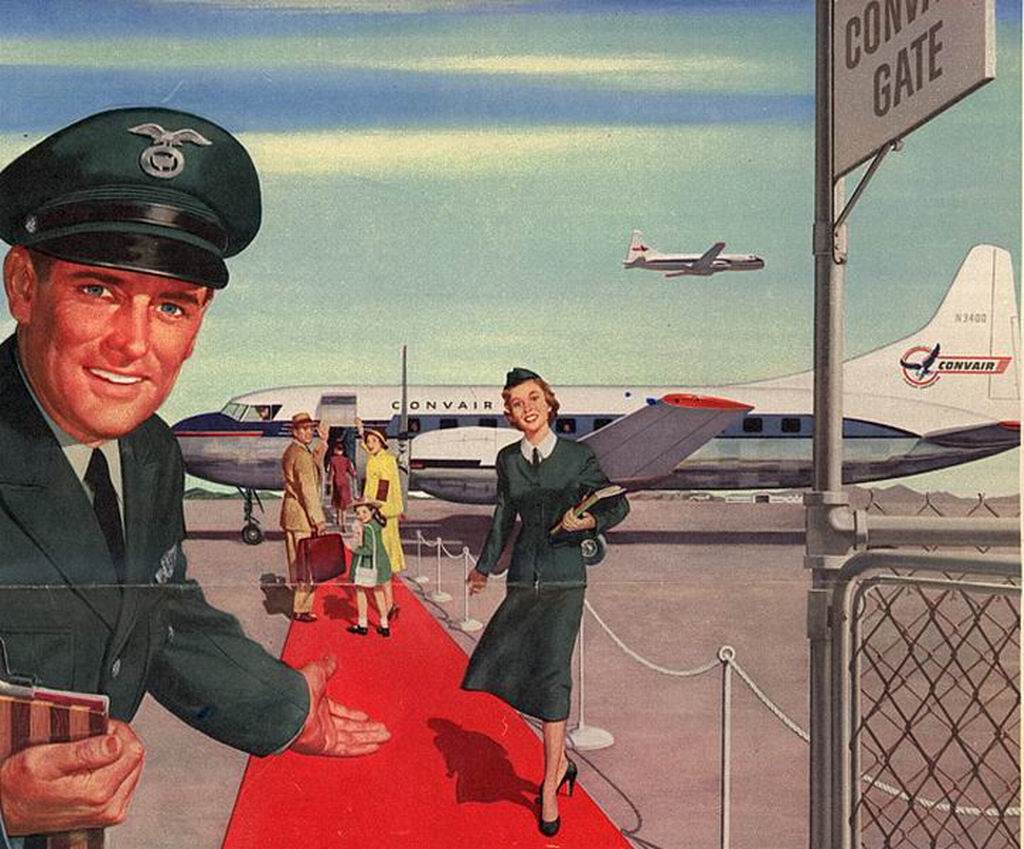 When I trained as a pilot I was appalled at how 1960s aviation is. This will be hard for you to believe, but even when you have WiFi on the plane, commercial pilots in most cases do not have Internet in their cockpit, nor do they have satellite phones, nor GPS trackers. All they have to connect with ground is old style radios. And radios that sound awful. Radios are not safe, anyone for any reason can interfere with them. Indeed any person can buy an aviation radio without any kind of permit and start pretending he or she is a controller and aircraft have no way of verifying that they are indeed speaking to a real controller. Plus there is the confusion factor. When you train as a pilot, a lot of what you have to learn is how to understand controllers over a radio, a radio which has poor sound quality and leads to frequent mix ups because of the different accents and languages that are spoken around the world by controllers and pilots. While in theory all controllers should speak English, Spanish traffic controllers for example speak in Spanish to aircraft that have Spanish identifiers, or address them in Spanish, sometimes depriving other aircraft flown by non Spanish speaking pilots of information that could be useful to them. Moreover, radio frequencies forces pilots to listen to everything that is said to other aircraft until you are called, something that I find extremely distracting when piloting. Imagine if you had a telephone system in which you had to listen to everyone else’s conversations until somebody finally spoke to you. Well that is what is happening in the air right now all over the world. Primitive. In my view it is indefensible that we send planes loaded with passengers over the oceans without Internet, real time voice communications nor GPS trackers. And even over land and near the coasts we use radars to know where aircraft are, but radars have very short range so we can’t have radar coverage over oceans. The radar/transponder system is just obsolete as a way to know where aircraft are. But still the norm. Then many times pilots are proud of their FMS systems, and in general I don’t know for what reason many times pilots are proud of aviation the way it is. But that is wrong, for example FMS systems don’t have QWERTY keyboards. Typing in them is a slow, painful process. And when pilots make it to airports, many of them are still using paper charts, yes paper charts from Jeppesen to find their way in and out and around airports.
That Malaysian MH370 can disappear over the ocean and nobody knows exactly where, or the Air France 447 flight over the Atlantic went down and it took months to find the black box, is just irresponsible on the part of aviation authorities. My own Citation, a private jet, has a GPS tracker so we always know where it is. It cost less than $1000. We also have a satellite phone that allows the pilots to call for help anywhere in the world on concrete problems they may face that the radio operator may not be able to solve. Those also cost around $1000. And there is now Internet available to planes around in the world. But commercial planes, even when they have it for passengers, do not have it for pilots. And it is illegal to install equipment that is not approved by flying authorities around the world. Think of a product like the Dropcam and imagine it on all commercial aircraft showing ground personnel in real time everything that is happening in the cabin, cockpit and recording in real time, that combined with good communication with the pilots would make aviation much less of the black hole it is today.
 In some cases a passenger with WiFi on a commercial plane can have more vital information than the pilot in the cockpit. For example, weather information. A pilot has a weather radar but the passenger can have real time weather information along the route, and that is as useful and sometimes more useful. But pilots in many jurisdictions are not allowed to use iPads with real time weather information. Private aviation has incorporated iPads and real time weather info much faster than commercial aviation. A commercial plane radar sees the next dangerous clouds (CBs clouds that can bring an airliner down) and that is all they show. But the passenger with Internet can have information about dangerous weather activity all the way to the destination. The passenger sees beyond what the pilot sees. Why can’t airlines have those tools if private jets already do? They cost very little more. Think of all the money we are spending on TSA and its equivalents to make aviation safe — can’t we spend a little more and have truly connected planes? If all commercial aircraft had GPS trackers, at least we would known exactly where AF 477 or MH 370 went missing. We should have every commercial airliner install a GPS tracker. Secondly we should connect all flights to the Internet and provide pilots with real time weather information anywhere in the world to supplement their weather radars as most private jets already have. What I find especially dangerous are flights that cross the Equator, where there are the most high altitude CBs during the night when you can’t see them. Thirdly, we should connect all FDRs (black boxes) to the Internet in real time so airlines know exactly what is happening to planes and alert pilots via the Internet and or satellite phones of unexpected dangers. Lastly we should give pilots a way to speak both over radio and over the internet/satellite connection so they can obtain help from their airlines or anyone else and not just that controller which has the radio that they can talk to. In many cases the communication could be via messaging that is directly sent to flying instruments and all the pilot has to do is hit OK. Right now the way things work is incredibly dated. A controller for example gives a certain aircraft a flying level while all the other pilots are listening in (in case the instruction is for them), then the pilots of the target aircraft have to acknowledge that they received the instructions, then the pilots of that aircraft have to remember what the instructions were (they are not sent in writing in any way and believe it or not, many pilots carry notepads tied to their legs not to forget and write them down while flying), then they have to go to their instruments, say the autopilot, then they have to input the new flight level in the autopilot, then they have to go to that flight level. Wouldn’t it be much easier to get an instruction over the Internet, hit OK, and have that instruction go to the autopilot and the plane to that level?
Or here is another example, ice detection. Right now the way pilots fight ice, and let’s remember that ice brings down planes, is by guessing when ice forming conditions could be happening and activating anti icing. In many cases they have to look at their own wings to see if there is ice building up. Again here night and day are very different, as at night it is harder to see that you are going through ice forming clouds. Some pilots have to turn on lights that shine on the wings. All this activity should be improved with sensors and real time weather information. Sometimes pilots have to navigate, be on the radio, fight ice and fight CBs all at the same time. This is just not fair to pilots. Anti ice should go on automatically. As things are it is an unnecessary burden on pilots.
Now the good news here is that we now have pilotless aircraft, drones, flying more and more frequently. It is my view that as driverless cars will show how to make driving safer, drones will show how to make flying safer.
2014 8
ONO sells for $9.5 billion and nobody cares
Published by MartinVarsavsky.net in General with
 A Spanish cable company, ONO, built originally by Eugenio Galdon and mostly by my friend Richard Alden between 2001 and 2011, is in the process of being sold to Vodafone for around $9.5bn, and nobody cares. It is sad how entrepreneurial successes that don’t happen in the USA or are not related to the USA get so little press. ONO is a fantastic story of near death, resurrection and now great exit for its investors. Spain, Europe, needs to learn to celebrate its start ups.
As somebody commented on Twitter: Imagine this headline “Google buys Spanish Ono for $9.5bn to start Google Fiber throughout Europe”. Now that would get huge coverage because there would be an American angle to the story. And this is true even though the buyer, Vodafone, is also one of the most remarkable entrepreneurial successes of Europe, a company that is about to collect $85 billion from the sale of its stake in Verizon Wireless in the USA. A company that has managed to get half a billion mobile customers around the world and is managed in a very entrepreneurial way by Vittorio Colao.
But we should not blame Americans for this. Americans do the right thing, they recognize and celebrate success. The blame is exclusively with Europeans who are still uncomfortable with and envious of big exits. Europeans don’t realize that if a company that went from nothing to connecting 7 million homes is not celebrated, that if building networks, creating jobs, bringing high speed internet is not celebrated, we will not get young Europeans on the right track to create the most innovative region on the planet which is what Europe should be.
(Photo: Angel Navarrete/Bloomberg)
2014 5
I just joined the board of Axel Springer
Published by MartinVarsavsky.net in General with
 I just joined the board of the largest media company in Germany, Axel Springer. It is very courageous of their part to appoint me as I have never served on anyone’s board and I have a very different profile from anyone else on their board. But I accepted this opportunity for two reasons, because I admire how well Axel Springer has transitioned into the digital world under the leadership of Mathias Doepfner and because journalism was my part time job since I was in college and I am passionate about it. Few of my friends know that I paid for part of my NYU and Columbia education being a US correspondent of Spanish and Argentine publications. For some reason the story that always comes out is that I also was a bike messenger :). But I am incredibly interested in the subject of how professional journalism can survive in the digital age. On how news will be consumed by millennials. On how to deliver valuable content to people over mobile formats. On how to help Axel Springer globalize. Plus now we have a reason to go to Berlin four times a year, a city my wife Nina (who is German) and I both love!
(Photo: VentureVillage.eu)

2014 27
Money Can’t Buy You Time
Published by MartinVarsavsky.net in Entrepreneurship with
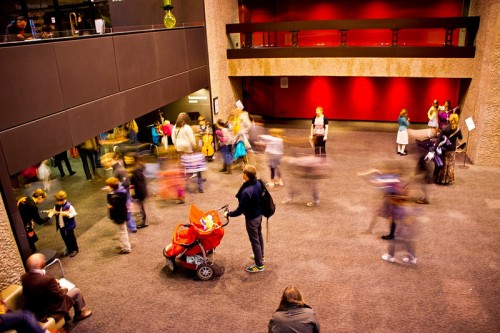
When I was a student dreaming of making it as an entrepreneur, I imagined that success would give me a world of opportunity in which so many new possibilities were open to me.
Well, a few billion dollar exits later, this turned out to be only partly true. The other lesser known obvious fact is that the day of an entrepreneur has the same amount of hours as everyone else’s.
After a while, you realize that success means not that you can say yes to so many new and phenomenal opportunities, but that you end up saying no to even more new and phenomenal opportunities. And these rejections keep piling up in the form of not hiring a great person, or not attending a great event, or not investing in a great company, or not taking a fantastic vacation, or even worse, missing the birthday of somebody you love so much.
Because in the end, there is only so much you can do, and the differences among great opportunities are not big enough for the choices to be obvious. Especially if you also love being a husband, father and friend and a lot of your time is devoted to that. Every time Nina, my wife, says we have to go over our calendar, I agonize.
As you do well in life, it’s not the cost of choices that drives scarcity, it’s distributing finite time over them that does. And a good life, as a good product, is not about being able to do everything, but about doing enough, well enough and leaving the rest aside.
2014 20
Is WhatsApp worth $19bn? It is to Facebook and here’s why
Published by MartinVarsavsky.net in General with
 The WhatsApp acquisition price sounds high, sky high, crazy high. But it’s not if you put yourself in Zuckerberg’s shoes and think about it in these terms: Facebook bought a network that was a real threat to its existence, that is growing much faster than itself (growth drives valuations) and has almost half as many members already, for only 10% of its value. And it prevented it from going to Google. So from this perspective $19bn in Facebook minted currency makes sense. If you call WhatsApp a better SMS system, hence an attack on the telco industry, on size alone, it is as big as half of all the texting that goes on in the world. SMS, as Facebook said in its investor conference after the acquisition, is a $100bn industry. Where are Facebook/WhatsApp headed? In my view towards doing with telephone minutes what WhatsApp already did with SMS. WhatsApp killed the I-bill-you-by-text-message telco model. I would not be surprised if WhatsApp next move is to kill the I-bill-you-by-the-minute model. It is not reasonable that Facebook, which wants to connect everyone on the planet, still does not have a platform for people to have actual conversations a la Viber or Skype. I can’t imagine that things will stay this way. And owning the world’s texting and the world’s conversations may very well be worth $19bn.
What we have learned about Facebook is that Zuckerberg will pay whatever he has to pay to stop a rising competitor from eating his lunch. First Instagram, now WhatsApp. Moreover that he can live and let live, acquire and keep the acquired company in shape. Instagram is still pretty much the same product it was when it was acquired. WhatsApp is likely to evolve but on its own.
(Photo credit: MusicZine)

2014 19
The Berlin Wall did not completely fall, it moved East, to Kiev
Published by MartinVarsavsky.net in Europe with
Looking at what is going on in Kiev, I think that Ukraine should be allowed to join the EU today. Yes, today. Or at least EU should offer that. It should go further than the November free trade offer. Up the ante. Tilt the balance in favor of democracy.
Ukraine is extremely complementary with the EU in many respects and its population is European. But the challenge with democracy, and especially non-presidential democracy as we have in the EU, is that we have a hard time acting during a crisis. Especially when on the other side we have one person, Putin, who single-handedly can make serious threats for Ukraine should it avoid to join the “Russian Federation” and on our side, it takes millions of voters and a very complicated admission process to join EU or rally any concrete intermediate help. And being cautious is normally fine, but in these unusual circumstances, I think Europe should unite and offer Ukraine to join.
EU has had challenges but I am still convinced that it is the way of the future for this part of the world. More so if the alternative is the current Russian model. The EU is a form of government that gives tremendous democratic, federalist powers and yet a common market for goods, services and currency that allows all to trade. As opposed to US, Canada and Mexico with NAFTA, the EU gives PEOPLE the opportunity to move freely and work freely. And this union will keep Europe very competitive. Just like Poland made Europe more resourceful and complementary by entering the EU, so would Ukraine.
Europe should take Ukraine in out of self interest, out of solidarity and in order to prevent Russia from having an unreasonable power over EU. The Berlin Wall did not fall, it moved East to Kiev, and maybe one day it moves to Moscow, and then Russia reforms and joins the EU as well. Because Russia, Ukraine, have always been and are Europe.
(Photo credit: Brookings)

2014 20
Fon is in Africa!
Published by MartinVarsavsky.net in Fon with
 I am thrilled to announce that Fon has partnered with the South African telco MWEB, the leading internet service provider in the country! This is our first African partnership and our first step towards blanketing Africa with WiFi. We couldn’t be more excited.
MWEB ADSL customers with a Fon-enabled router will be able to become Fon members for free — in exchange for sharing their unused WiFi, they will get free access to our network of 12.4 million hotspots!
The rest of the Fon community will benefit as well: we are expecting more than 30,000 hotspots across South Africa by the end of 2014!
After our success in Europe, Asia and America, we are happy to finally set foot in a new continent, and into a country that is quickly adopting mobile technology, especially WiFi.