
2014 2
Where does the sky start?
Published by MartinVarsavsky.net in General with

Mia(2) and I went for a walk at our farm in Menorca when all of a sudden she asked me. “Dad can you carry me in your arms? When I am in your arms I can touch the sky” I was moved by her request and carried her in my arms until we arrived at an area of the farm with pre historic ruins. When we were there I asked her where else she felt like she could touch the sky. She told me she could touch it when she climbed to high places. I asked her to show me and she walked up to this stone fence and touched the sky.
So if you ever wondered where the sky starts, here is her proof, the sky starts at around 1.5m from the ground. She certainly convinced me. Now I know that the sky starts somewhere between Mia and I.
2014 26
Fon in South Korea!
Published by MartinVarsavsky.net in Fon with
 We’re happy to announce today that we’ve just signed an agreement with KT, the leading South Korean telco!
Starting today, Fon members who visit the country will gain free access to KT’s WiFi network throughout South Korea. In return, select KT customers will also get free access to our 13-million hotspot network!
This is our first step in a joint plan to extend our WiFi network in Korea, one of the most technologically-advanced countries in the world. Ultimately our goal is to expand the partnership to the entire KT customer base and provide the best WiFi experience in South Korea.
This adds to our already extensive Fon WiFi network in South Korea, making it the country with the second best Fon coverage in Asia after Japan.
We are very excited about this new agreement and we can’t wait to continue bringing Asia access to the largest WiFi network in the world!
2014 25
Voice Recognition: Google vs Apple
Published by MartinVarsavsky.net in General with
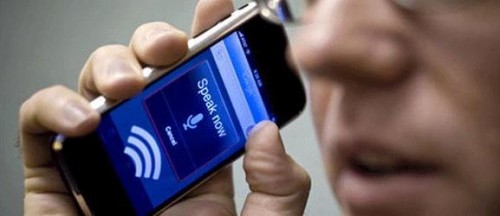
After two decades of false starts I think voice recognition, or speech to text translation, has finally come of age. Lately in both Spanish and English I find I am able to speak and have smartphones transcribe most of what I am saying. This is true both in Apple and Google. But because I use an Android and an iPhone on a daily basis I wanted to test who has the best voice recognition technology, Apple or Google?
So what I did is simultaneously speak into the Mail app of my iPhone 5S and the Gmail app of my Android Samsung 5, both connected to the same Fon WiFi network with Movistar fiber optic service behind them, in Alcobendas, Spain. Then I sent emails to myself. And these are the results.
Apple Dictation
These is a test to determine which system works better if the voice recognition off the iPhone or the voice recognition of android so what I am doing is I am dictating two emails simultaneously door and iPhone and android on I’m checking which operating system understands me better
Google Dictation
This is a test to determine which system works better if the voice recognition of the iPhone or the voice recognition of Android so what I am doing is I am dictating to emails simultaneously 21 iPhone and Android on I’m checking which operating system understands me better
Even though both operating systems made mistakes Google made a few less and is the winner here. Especially because on Android you see each word as you speak and in iOS you have to wait until you finish and hit done to see how well your spoken English was transformed into written English.
And this is the test in Spanish:
Esto es una prueba en la que quiero comprobar la calidad del sistema de reconocimiento de voz de los dos sistemas operativos el de Google y el día todo lo que quiero ver es cuál de los dos sistemas entiende mejor mi castellano
Apple
Esto es una prueba en la que quiero comprobar la calidad del sistema de reconocimiento de voz de los dos sistemas operativos el de google y el de apoyo lo que quiero ver es cuál de los dos sistemas entiende mejor a mi castellano
In Spanish both Operating Systems did equally well. They both got everything right except the word Apple. But again I prefer the immediate feedback that Google gives you as you speak. Also Google did much better understanding my name out of all the email addresses. Apple had a much harder time on email address dictation, I don’t know why.
Spanish is my native language but I am very fluent in English so it is not surprising that there were a few less mistakes in Spanish.
My conclusion after this test is that both Apple and Google are finally offering true voice recognition but that Google has a slight advantage.
2014 23
Fon lands in Australia!
Published by MartinVarsavsky.net in Fon with
I am thrilled to announce that Fon is launching in Australia!
 Telstra has joined forces with Fon to become our new telco partner in the country. Our plan: to create the largest WiFi network in Australia. The company is spending more than 100M AUD on their WiFi strategy and Fon is key to this plan.
This partnership means that Fon’s current 13 million global hotspot network will be increased by an estimated two million Australian hotspots over the next five years. Fon members who visit Australia from overseas will be able to connect for free wherever there are hotspots available! Also, Telstra home broadband customers with a compatible modem will be able to join the Fon community and access WiFi in a number of top cities around the world.
Our ultimate goal at Fon is to build and expand our WiFi network, which is the largest in the world. How it works: Fon makes it possible to broadcast two powerful, dedicated WiFi signals from a broadband Internet source. One signal is encrypted and private. The other signal is public but only accessible via password to other registered Fon members. Since private traffic is prioritized, home users don’t notice a lower speed in their connection.
After our recent success with Gramofon on Kickstarter, we are so happy to continue spreading good news. Thanks to and everyone involved in making this partnership happen!
2014 20
How to update your degree
Published by MartinVarsavsky.net in General with
 University education has a time stamp added to it. Before that date, you are but a student, and after that time, graduation, you are, say a lawyer, an architect, an MD, an engineer, a computer scientist. But we all know that that is not true. That this is arbitrary. That learning is a lifelong endeavor. That there was nothing truly differentiating after that date. Indeed, the same degrees require different amounts of time in different countries. And whatever degree you get it will lose validity over time.
So here is an idea. Universities should protect you from “degree obsolescence”. How? Well, universities are always asking money from alumni. Basically what they do is they promote reunions and ask for donations. But how about doing something more productive with reunions? For example, when your 10th reunion comes up yes, you are hit with a request for donations, but you are also offered say a month long update of your degree. Something you can do after work, say from 5 to 8pm for a month or two. With your university buddies. So graduates, after say 10 years of getting their medical degree, would get a very good one month update of everything that has been developed in those 10 years in medicine. It would be like a software update, a firmware upgrade, an app update. Universities would give you a lifetime guarantee of the value of your degree. And you would likely be a happier donor.
(Photo credit: Ajira Blog)

2014 12
Gramofon hits Kickstarter goal!
Published by MartinVarsavsky.net in Fon with
We did it!
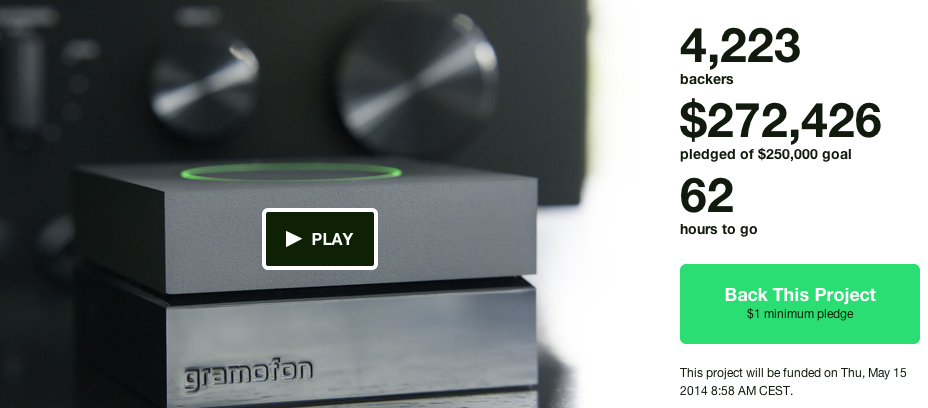
Gramofon reached it’s goal on Kickstarter and the product will officially become a reality very soon! Thank you so much to all those who contributed to make this possible.
There is still one day until the campaign ends, meaning you still have time to reserve a Gramofon unit with a significant discount. For only 39€/$50 including shipping, you can have one for yourself!
The response so far has been amazing. Both our backers and the press have spoken highly of the project and in doing so, helped us reach our goal! Here’s a sample:
– “A cut-price alternative to connected hi-fis from companies like Sonos” — The Guardian
– “Apple TV for your sound system.” — TechCrunch
– “The adorably-named Gramofon competes with audio and media streamers from the likes of Sonos and Roku” — CNET
– “Streaming music through your home entertainment system should be simple, but..it’s a mess. Gramofon wants to solve that.” — The Verge
– “Because Fon has plenty of experience in building routers, you friends can use the Gramofon to get WiFi too, without needing your password.” —The Next Web
– “It uses Wi-Fi as a kind of authenticator for social music consumption.” —Giga Om
– “Music lovers will go nuts for the Gramofon (…) Set-up literally takes less than five minutes, and it works flawlessly” — Business Insider
And our experience with Kickstarter was fantastic. Not only is Kickstarter an incredibly inexpensive way to make a new product succeed, it is also an incredibly inexpensive way to fail with a product. Before Kickstarter, it would have cost us around $3M to figure this out and possibly fail. Instead, the verdict is in and we’re happy to see that people love it!
On a final note, I would like to give a huge thanks to the Fon team who made this project possible and to Amol Sarva who has been tremendous help with the Gramofon all along. It’s been a pleasure working on this with you!
2014 6
Dad, what do you do?
Published by MartinVarsavsky.net in General with
Dad, what do you do? I am an entrepreneur Leo, I build companies. And what is a company? A company is a group of people who get together to accomplish something. And what is your company? Fon. And what does Fon do? We give WiFi connectivity to everyone, so for example, your iPad and everyone else’s iPad, can have games, movies, music.
Leo was pleased with the explanation. Happy with what I do.
And I was happy that I wasn’t a hedge fund manager.
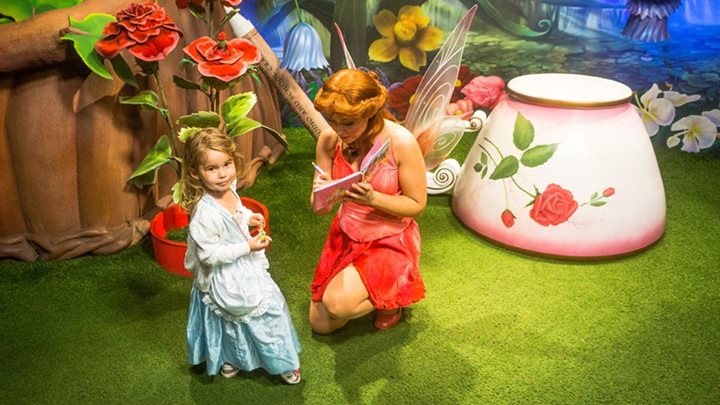 I am a father of six children, not a child psychologist. So what I am about to say comes from experience not academia. But still I think it’s valid. And it refers to a question that somebody asked me that went like this. Why should you expose a two year-old to awesome experiences if she will not remember them. So this is what I think: yes you should expose them to awesome experiences and no they won’t remember them. And this is not contradictory. Allow me to explain.
Why should you, for example, take your two year old to meet the princesses in Disney World, or any other great child-oriented vacation? Because in my view, children are made of a very unique parental clay that somehow solidifies at the end of their childhood. Yes they have their own scaffolding or structure, but over this structure, every day of your parenting, you add some love clay. Yes, every day. And what should concern you as a parent is that on a poor day of parenting, say of parental neglect, you also added clay, but of a poor quality, with very little love in it. And that was your chance, that was your opportunity to build your own child that day, and you did a poor job. And it will remain. Maybe another day you were an artist of a parent, you were inspired, you connected to your two year-old in a very special way, and that day your child got a lot of love clay. And that clay also stayed for good, and that was personality building. Yes children are like that. It’s not what they remember that matters, it’s how they are built, by you. Day after day. So now you understand why it is great to take a two year-old to a great event that she or he won’t remember. Because that day you will be a better artist, a better parent, and that day will build your child in a positive way, forever. And many of those days make you a good parent. At Disney World or at the park near your home.
2014 15
Gramofon launched on Kickstarter!
Published by MartinVarsavsky.net in Fon with
 I am very happy to announce that Gramofon just went live on Kickstarter!
Gramofon is a new gadget category that blends WiFi and music. It has all the functionality of a Fonera but also works with Spotify to deliver the easiest way to play your cloud music from your existing sound system. On top of that it is social, so up to 20 people can connect via Facebook, and DJ simultaneously. Additionally, it works amazingly with other Gramofon units.
I decided to build this device about a year and a half ago because I found that there was no offering that allowed me to play cloud music in the way that I listen to music – socially and in my living room. I tried everything and wasn’t satisfied with the solutions that were out there because they either made me buy an expensive new system, were expensive solutions to a simple problem, or were poor solutions and hacks.
We put together a prototype early last year in New York and Fon Labs has been working on the product out of Bilbao ever since. We worked with Bone and Black on the design and now have a beautiful device that is finally ready to be revealed to the world!
We wanted to first get it to the kind of people that supported Fon to begin with: the early adopters, the people who believe in the power of new technology. For this reason, we decided to launch on Kickstarter – a crowdsourced network of backers.
So please take a look at the page. I hope you love the Gramofon as much as I do!
2014 5
How fair is life
Published by MartinVarsavsky.net in General with
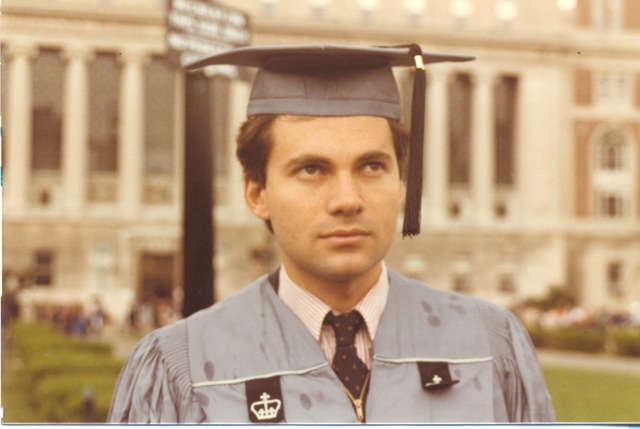 There is a small number of people who grew up poor or middle class and are now rich. I have met quite a few. This group is divided into two kinds, the ones who realize that being exceptionally gifted yourself does not mean that we live in a fair society and the ones who believe that we do live in a fair society and they are the proof, that all others have to do is try hard and succeed like they did.
I grew up middle class, one of six kids supported by a university professor, and have come to the conclusion that even though I have done very well, the developed world is somewhere in between in terms of fairness.
I do believe that people from any class who are extremely talented at something can do very well in most developed countries, and in that sense life in those countries is fair. But what is not fair is that very few people in society are extremely talented at anything and in many cases the life of those who aren’t is pretty bad. Especially in the USA in which the middle class has not increased its standard of living since the 70s and three quarters of the population have no savings at all.
In general I believe that societies should be judged not by how the top 1% lives but by how the bottom 20% lives. Better than having the richest people in the world it is that your country has the least poor in the world. I want to see countries ranked according to how the bottom 20% lives. To me the most successful and fair countries are not the ones with the most billionaires, but the ones who have the richest poor people in the world. Because if those are not doing so badly, then everyone else is doing better.
But I was never able to find a statistic like that.