
2010 4
UK to forbid Open WiFi – FON can help
Published by MartinVarsavsky.net in Fon with No Comments
As ZDNET reported, the UK government will not make an exception with its proposed Digital Economy Bill for public institutions offering “Open WiFi”. The Digital Economy Bill intends to crackdown on illegal downloads of copyright protected data. The bill suggests that ISPs could shut down a subscriber’s internet connection if the subscriber has repeatedly committed copyright infringement via his internet connection.
These penalties not only apply to individual subscribers, but also to institutions and businesses who leave their WiFi open to guests or members. This means, if a bar-owner leaves his WiFi open, and a customer accesses the internet and downloads content illegally, the bar owner will be held responsible. The ISP could even temporarily suspend the subscription. The same is true for libraries, universities and all kinds of shops. So, de facto, this would mean an end to open and unprotected WiFi in the UK.
That is bad news for anybody who wants to offer WiFi to their guests!
But, the good news is that FON can help!
FON service is unaffected by this bill as we comply with all the requirements of the UK government. FON does not offer open and anonymous WiFi access to the internet, but controls the access. Users who log on to FON need to be registered with FON. We know their identity confirmed by payment details such as credit card or phone number. We comply with all requirements of the UK Telco Regulation and collaborate with authorities if requested to identify copyright infringement cases. Just like other hotspot operators.
So, all a bar, café, shop or institution needs to do is use our Fonera WiFi router instead of an WiFi router with “open WiFi”. With a Fonera router, anyone can offer WiFi safely to their customers and not have to worry about copyright or other infringements. FON manages the access to the network.
The Fonera+ is available for purchase in the UK for just £29.95 at our FON Shop.
I am not a VC. I am not an angel (don’t like the term). But I am a business mentor. Most of the times my mentoring is accompanied by an investment. Occasionally I get some shares in exchange for mentoring. If you look at the right side of this blog you will see the companies that I have invested in. Wikio, Netvibes, Plazes, Dopplr, Tumblr, Technorati, Eolia, Seesmic, Vuze (Azureus), Meneame, Joost, Moneytrackin, 23andMe, Aura Biosciences, Sonico, DineroMail, Sevenload, Vpod, and Xing.
As a result of these investments I get many pitches. More than I can handle. So I have two great people helping me look at these investments. One is Eduardo Arcos, the entrepreneur behind Hipertextual, the second largest blog network in Spanish in which I am an investor. The other one is Mahesh Kumar, a brilliant Indian student whose time I share with Result, a company in which I am also an investor. Now, other than that Eduardo and Mahesh are two great analysts, there is another reason I work with them going over pitches. Analysis is such a slow process.
So before getting more pitches, I would like to explain what my ideal format for getting pitches would be like. What I want is to get not the typical Power Point. Instead I want a TALKING Power Point. I want a Power Point in which I hit play and in 5 minutes I hear a presentation of the company narrated by the entrepreneur. I want to hit PLAY when I get a presentation not go over slides that were meant to be narrated but I still get 1999 style without video or sound. And of course it does not need to be in Power Point which I don’t even have (I use open source software to read PP). My ideal pitch could be slides with a small box for the entrepreneur to speak in video, or an alternation of the entrepreneur and slides, or simply slides with a voice over a la web demo. It could also be in stages. It could be 5 minutes and then the choice of… interested? Here’s some more. So if I like it and want to go in depth I can. These 5 minute pitches would make my day. And probably Eduardo’s and Mahesh’s day as well.
I would like to end by saying that my criteria to invest in a company are hardly objective. I only invest my funds, so I don’t need to have committees or fill up forms for liability protection. My criteria are: an entrepreneur with whom I would like to hang out with, a product I would love to use, and a valuation that is reasonable. But I have met some of the entrepreneurs I ended up mentoring through pitches, so I figured I would share my ideal pitch format with my readers.
![Reblog this post [with Zemanta]](http://img.zemanta.com/reblog_e.png?x-id=74cc058e-e679-4667-ae7a-55683dd51f19)
2009 31
Testing Gadgets in USA during July 09
Published by MartinVarsavsky.net in General with No Comments
During the month of July, spent traveling around USA all the way from Miami to Hawaii passing by California, Idaho and New York, whenever I could, I took time to test wireless gadgets. Here are some random observations:
-The new iPhone software update makes it impossible to use pre-paid ATT data packages on iPhones. This is silly because on unlocked iPhones you can use the data packages of, say, T Mobile. So why would ATT want to drive its customers to their competitors?

Peek
-I loved the Peek. It is like the poor man´s Blackberry. Of course a Blackberry is much better. But Blackberry service is at least three times as expensive. The Peek costs $20 and the unlimited email monthly charge is $15 and no contracts. The negative though is no Facebook, no Twitter, no web browsing, no attachments. But the Peek is the perfect alternative to foreigners who don´t want to be ripped off with roaming charges when they come to the States or for Americans who just want email for work. And while you can´t Tweet or Facebook, you do get the email notifications.
-T-Mobile has an amazing Blackberry offer that gives you free global roaming for $70 per month. This offer is not available from European operators, so getting a US T Mobile Blackberry is great for global travelers. But they’ll kill you with the voice calls both in USA and abroad, so forget about using it as a phone. But considering that Vodafone charges me $14 for every day I use my European Blackberry in the USA and T Mobile charges me nothing when I use their Blackberry in Europe, Asia and Latam, it is clear which one is the better deal.
-I tried a new phone from Kyocera that Virgin Mobile sells for only $90 but was not impressed with either with the phone or the service. The service has something absolutely annoying; their data package does not include email and they charge you 10c to send or receive an email as if it was SMS (the rip off champion of the wireless industry). The service itself, which goes over the Sprint network failed most of my tests and the coverage was awful. And the phone has the most primitive interface. If you buy it you will experience a serious case of iPhone nostalgia.

MIFI
-I was fascinated by the MIFI. Saw it with Verizon and Sprint but did not buy one cause it is super expensive. The Fonera can do what the MIFI does but the MIFI beats the Fonera because of its simplicity and size. Of course there are tons of things that the Fonera does including creating a global shared WiFi network and uploading and downloading pictures, videos, films, games on its own from the Internet that the MIFI does not do but if converting 3G to WiFi is all you want it pains me to say as CEO of Fon that it is better to get a MIFI.
-ATT has the best pre-paid service in America. It is great because it combines pre-paid data, with free calls to any ATT number with a $1 a day 10c plan that is perfect for visitors and occasional phone users. T Mobile has the same but the coverage is worst and there are less T Mobile users. Did not test Verizon.
– It is amazing how many subsidized, no contract prepaid phones you can buy for nothing in USA. Obviously the carriers believe what Fon wrongly believed at one point, that if you give hardware for free, or close to free, you will make money with the service. Maybe. But in the meantime as a visitor you can try tons of gagdets and buy them at prices which are clearly lower than their manufacturing costs. Nina, now my wife, kept laughing at the amount of $15 to $100 wireless gadgets that I accumulated during the month of July. The Samsung A177 is a good example.
-I bought a MacBook Pro 15 inches and while it´s much more expensive than a PC with similar characteristics it is by far the best Mac I have ever had. 500GB hard drive, 2.8Ghz processor, 4GB of Ram and a few compromises with the non Apple world such as an SD RAM card reader. I still believe that Jobs should make a deal with HP, Dell and others and license OS X in order to avoid becoming too boring. I can imagine Putin entering an Apple shop and thinking, “one phone, one laptop, one desktop, this is how the Soviet Union should have worked out”.
-I had the perfect plan to avoid roaming charges. I gave Nina our Blackberry and tried to survive for a month using the iPhone and the Nokia E71 with a $20 prepaid data plan from ATT. I suffered a SERIOUS case of Blackberry envy and frequently ended up asking her for the Berry. Why? Well first I made the mistake to upgrade the iPhone to the latest software and that killed my ability to use it with prepaid ATT data. Secondly I tried and just HATED the Nokia E71. And interestingly I did have a chance to meet with Nokia´s CEO during this month and tell him this in the nicest language I could find. The Nokia E71 is a PAINFUL product that tries to do everything and does everything BADLY. As you see I am getting excited here using capitals, and all but it hurts me to see the number one European tech company producing a product like a Nokia E71 that won´t do IMAP email well (the email client doesn´t download emails till you go one by one), their push email stopped working and I could not fix it, writing in the crammed keyboard is worse than the iPhone – now improved with landscape mode, the music app is non intuitive, my conclusion with Nokia is that either they completely revamp Symbian or they die. In the meantime, during July, I saw my Nokia shares go down in an up market which made me realize that traders who buy Nokias agree.

Sanyo Xacti HD Camcorder
-I love my Sanyo Xacti Full HD camera. At $349, it´s the best of its kind. The quality is superb and it is so easy to use. I don´t understand why America is in love with the Flip Camera. Yes, it´s simple, but you can´t compare a video done with the Xacti with a video done with the Flip Camera whose quality resembles that of the high end mobile phones.
-As I get more and more into photography I decided not to take sides, clearly an expensive proposition and double up going BOTH for Nikon and Canon. So now I have a Nikon D90 with a Sigma 18 200 and a fixed 85mm 1.4 and a Canon 5D with a Canon 12 200 zoom and a fixed 85mm 1.2. The verdict is not out yet but I have a strong sense that other than in convenience and weight, (Canon equipment is bigger and heavier), Canon will win. Here is my first Canon test.
-Gmail finally made it possible to to send email from Gmail with YOUR email address. This helps the Android phone. Yes, I have been testing that one as well. The HTC Magic. The integration with Google is phenomenal. But it is lacking in iTunes. That´s where the iPhone beats all. In entertainment. Google has to learn how to make people smile, to appeal to their hearts, not just their brains.
-A trend that keeps growing in America is people who watch TV with their laptops connected over wifi or with their smartphones, or with their game consoles and both watch TV and play games, Facebook, IM, etc. The USA already had the lead on how many hours people spent in front of a screen, a time that in Asia, Europe and other places people spend with other people. But now, the USA will have the lead on time spent watching more than one screen at a time. Not sure it´s a great record to have.
2009 14
How to make Ocean flying safer after the AF 447 accident
Published by MartinVarsavsky.net in General with No Comments
It is unacceptable to go on sending planes over the ocean without position trackers, real time weather information, ground based support and no satellite phones. It is wrong that in emergency situations pilots can only communicate with, say, Cape Verde control and not with their own airline, or even plane makers such as Boeing or Airbus. It is absurd that we don’t know where planes are when they fly over the ocean and even when they are on the ground we only know it within a few miles range but not exactly where they are because radars are so inaccurate.
Aircraft in transoceanic flights should send location, heading, speed and other relevant data by satellite; automatically and every few seconds. They should be capable of downloading real time weather data to increase the efficiency and safety of flights and pilot autonomy. Weather radar is a very primitive way to fly, especially without ground support. Weather radars from the plane should be contrasted with satellite info received in the aircraft. There should also be a secondary means for voice communication, also by satellite to be able to quickly contact an airliner crossing the ocean. Furthermore, making these flights safer should impact insurance costs, and increases in operational efficiency would lower fuel consumption.
In this post I present a few possible solutions to these problems. Of course, this is only one of many series of measures that can be taken to make these flights safer.
Voice communication and transmission of important flight data
The Guardian Skytrax 3Xi is a device that transmits GPS location, altitude, bearing, wheels up-wheels down, time and velocity information over the web, where it is accessible through a secure internet connection using IE or Firefox. A transoceanic airliner requires the 3Xi model, which works with external antennas and costs $2395. It can be configured for a message frequency of your choice (eg. one message per minute). The messages are $0.06 each, and there is a one-time activation fee of $110.
This device comes with the Maptrac system for tracking and reports, which costs $39.95 per month. Maptrac is a web-based mapping tool requiring no server, software, data purchase or IT investment. It allows airlines to see all their aircraft simultaneously, whether it be their active or historical tracks. There is a screenshot of Maptrac in action below. Guardian Mobility, the makers of the Skytrax, also have a Google based mapping system called Rimtax which can be used on iPhones and Blackberrys.
The Skytrax is offered standalone and in a package including a satellite phone. This package, including the additional antenna, goes up to about $4000 plus installation.
The cost for installation and certification of this equipment on an aircraft like the A330 is about $8000. The certification required is called a Supplemental Type Certificate (STC) and only needs to be done once for each aircraft model. After that, the cost of installation would approximate $2000.
It is also possible to send location, speed, etc. via Aircraft Communications Addressing and Reporting System (ACARS) messages. ACARS is a protocol in aviation communications for the transmission of short messages between aircraft and ground stations via Very High Frequency (VHF) radio or SatCom (Satellite Communications). This can be done for about $0.15/message. At one update per minute it would amount to $108 for a 12 hour flight.
Most planes on transoceanic routes are equipped to transmit ACARS via satellite, so this option involves no certification or hardware upgrades. It is still however more expensive than the Skytrax solution. Assuming two flights per day, one message per minute and the aforementioned prices you would save around $3900 a month by using the Skytrax 3i instead of ACARS. According to this, the Skytrax system is the better choice.
Receiving real time weather data
Real time weather data would require about 512kbit/s. The commonplace SatCom equipment in transoceanic flights uses a band of the electromagnetic spectrum named “L band“. Bandwidth here is too low and expensive to handle the data rates required for this application.
The “Ku-band” is another band that has been used to provide passengers with broadband connectivity aboard commercial flights in the past. It isn’t certified for flight critical functions but it is ten times cheaper at about $0.5/mbit of transmitted data. The intention here is not to replace primary, safety critical systems; but to complement them. Hence, Ku-band could be a suitable type of connection to download real time weather data.
The problem here is that although most of the aircraft that fly over the ocean are equipped with L-band avionics, very few are equipped with the systems required to connect to Ku-band signals. And they are expensive: About $0.25M each. However, this cost can be recouped by selling broadband to passengers, generating ad revenues from adverts placed for the passengers, more efficient flight routes and the lower insurance costs that should be associated with safer flying.
- Image via Wikipedia

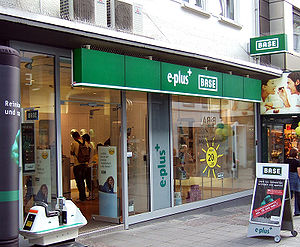
Germany is Europe’s largest economy and a key market for FON. People in Germany love FON and the Fonero community there is very active. However, FON’s WiFi footprint in Germany is smaller than in other European countries, like the UK and France, where our Telco partners have helped us grow. Fon´s partnership with E-Plus, is about to change that. Today FON is announcing a partnership with the E-Plus group in Germany. With more than 18 million subscribers and annual revenues of 3.2 billion Euros, the E-Plus group is Germany’s third largest mobile operator. E-Plus is part of KPN group and is considered an innovator in the German mobile Telco market. E-Plus will help the FON community grow in Germany with a planned series of joint activities starting this year. For example, E-Plus will install Foneras in more than 300 E-Plus stores in prime locations throughout Germany. Together, FON and E-plus will target cafes and other public places where we will install FON Spots as part of the “City FON” initiative – similar to the “Chueca WiFi” and “Shoreditch” density projects in Spain and England. E-Plus will promote FON to their 18 Million subscribers and will help us to encourage them to become Foneros. E-Plus customers who register for the collaboration will be eligible for discounts on Foneras and will get free trial access to the FON WiFi network and once they installed their Fon routers they will be able to roam the world for free connecting to other Foneros.
The FON E-Plus partnership is great for two reasons. E-Plus has great marketing power that will increase FON awareness and help the German FON community grow faster. E-Plus is the first pure mobile operator to partner with FON. Initially journalists and bloggers had argued that Fon would be stopped by fixed and mobile operators. Some of these experts confused Fon with a P2P telco network. But the difference here is that while P2P networks destroy value for the music labels, Fon increases value to telcos. How? Well, as our partnership with BT, known as BTfon, and others have shown, Fon generates value both for consumers and telcos. For consumers the proposition is clear, you share some extra, limited, bandwidth at home in a secure way with a second SSID or WiFi signal, and in return you roam the world for free. For fixed telcos, Fon increases customer loyalty, reduces churn, reduces customer acquisition costs. Fon enabled fixed operators can also resist price decreases as their customers have WiFi at home and everywhere else.
Now, for mobile operators, the one big benefit of Fon is reduced capex (investment in the network). 3G is a phenomenal service because of its coverage and frankly no matter how many hotspots we put, Fon will never compete with 3G in terms of coverage. So customers who want to have Internet in a car or to find it no matter where they are will always have to use 3G. But when there is WiFi, there are now tons of mobile phones that have a WiFi option, including the iPhone, Nokias, Samsungs, HTCs and others. And use of WiFi is advantageous to operators because: customers are happy with the speeds, they pay their monthly service anyway and they don´t use the much costlier 3G infrastructure. 3G is great for operators for voice and light data. But when people start downloading 300MB movies and TV series to watch in their mobile devices, operators either have to charge for that bandwidth making movies expensive, or prefer that people use WiFi. Moreover, some of the most popular gadgets in the world, such as the Nintendo DS, the PSP and so on, only come with WiFi. In this way, E-Plus can now service its customers on all of their connected devices.
All in all, this proves a point I have been making for a long time. FON and Mobile Telcos make great partners. WiFi is a complement to 3G. Moreover, we are very excited that this announcement coincides with the launch of the Fonera 2.0. The Fonera 2.0 has just been introduced in Germany (not yet in the UK) and it is a router that not only gives you free roaming but also manages your transfers to the Internet. Fonera 2.0 on its own sends your videos to Youtube, your pictures to Flickr, downloads your files from Rapidshare or Megaupload, or Bittorrent (disclosure this app is working poorly at the moment) and it is especially good for converting 3G signal from HSDPA modules to WiFi.
If you would like to interview me about this announcement please use the contact form of this blog and I will be happy to answer questions.

2009 4
We ran out of stock in the Fonera 2.0. Why did you not get one?
Published by MartinVarsavsky.net in Fon with No Comments
Sorry, the Fonera 2.0 is out of stock. The next ones will arrive in a month. In the meantime, we at Fon are not only interested in those who bought a Fonera 2.0 but in those who did not buy one. So I prepared a poll for those who were not attracted by the offer to help us improve the product and the message when the new stocks arrive and as we develop future Foneras.
2009 29
Gadgets that Twit themselves
Published by MartinVarsavsky.net in General with No Comments

- Image via CrunchBase
Today during a brainstorming session at Fon, David Garcia from customer care had an idea that we are likely going to implement for the Fonera 2.0 but that could in theory be expanded to many other gadgets. It is the concept of gadgets twitting themselves. Why would you want to get twits from a gadget? I know the idea sounds absurd at first but the Fonera 2.0 has a lot of things to twit about. The Fonera 2.0 is a social WiFi router that manages your relationship with the Web 2.0. If the Web 2.0 is all about user generated content (you can wake up now) then the Fonera 2.0 is about managing the transfer of that content. The Fonera 2.0 uploads your pictures to Facebook, Picasa, and/or Flickr, it downloads your files from Rapidshare and Megaupload, it uploads and downloads your torrents, it uploads your videos to Youtube, it offers a little extra bandwidth to your neighbors or people who pass by your home or office, it converts 3G signal to WiFi signal and it does all those things while your computer is off. On its own. So for a gadget that does a lot of things on its own but does not have a keyboard or a screen Twitting makes a lot of sense. Possible twits are “i just gave some bandwidth to a fonero”, “uploading pictures to Flickr”, “finished downloading torrent”, “finished sending 553 MB HD video to youtube”,”3G to Wifi conversion now on”, etc, etc, etc. In the case of the Fonera 2.0 twitter saves us from having a graphics card, a screen, a keyboard, many weird lights that mean all sorts of different things. But if that is what Twitter can do for the Fonera 2.0 imagine what it could do for many other gadgets: “your turkey is ready”, “your garden´s watered”, “your pool needs chlorine”, “you are running low on oil”…

I understand Technorati, for example, when it gives me real time searches of what people are saying about the Fonera 2.0. I understand the fact that a blog search engine should find what people who are blogging say about our new router, the Fonera 2.0. And, that information is very useful to us at Fon (disclosure I am an investor in Technorati). But, what blows my mind is that I can now see what people on Twitter are saying about the Fonera as well. Because a blogger, well she/he wants to be heard. But a person communicating to his friends in Twitter, is she/he aware that whatever one says is public and searchable? I wonder to what extent all users know that whatever they say to their friends the whole world can read (unless they set Twitter only to communicate with their friends but few do so)? And if they do understand this, then Twitter is one more proof that most people don´t give a damn about privacy. Now for businesses, Technorati and Twitter are an amazing combination for gaging popular sentiment after a product launch and for reacting immediately to any problem that may arise. We at Fon are constantly following early sentiment on the Fonera 2.0. Fortunately, so far as you can see doing your searches, it is extremely positive.
 During our last trip to Morocco which resulted in our engagement, Nina and I both took Netbooks. She took her fancy MacBookAir. I took the MSI Wind that my friends had turned into an amazing triple combo of Mac, plus Ubuntu, plus Windows XP.
Yes, I know it sounds crazy, but thanks to a special install by some friends, this 400 euros machine runs all three operating systems. And on top of that the battery lasted over twice as much as the MacBook Air, it has 3 USB ports instead of one and for pictures it had a great SD slot that of course Apple would never install because it would ruin its hardware aesthetics. In the desert climate, with a rare connection to electricity, frequent dust and sand, the MSI Wind performed like a star. Why am I telling you this?
 Because when I shared my enthusiasm with Jordi Vallejo, from Fon, he told me that the managers at MSI Wind loved Fon and it turned out that this was the case cause they loved the idea of doing a Fonera 2.0 / MSI Wind bundle which we launched today in France, Italy and Spain with more countries coming soon.
Basically, we are selling both the MSI Wind and the Fonera 2.0 for only 379 euros introductory price. I hope you like the MSI Wind as much as I do, because it has become my portable computer of choice beating not only the MacBook Air, but all the other netbooks I tested including the Dell Mini and the Asus EeePC. Here´s the link to order the bundle in Spain.
I would also like to share with you what the blogs say about the Fonera. And for technical questions I recommend you read this.
Wired, boing boing, PR News, Gearlog, dv-depot, pc mag, Endgadget

In the video at the bottom I show the main features of the Fonera 2.0, our new social router that is being manufactured in China and for which we are already accepting reservations in our online shop. Initially we’re going to price it €49 (around 66$). The Fonera 2.0 not only lets you share some of your bandwidth at home, make money with your WiFi connection and roam the world for free, it also lets you manage your storage, backup, uploading and downloading activities and connect your HSDPA or 3G USB Dongle and emit WiFi. More details.
With the Fonera 2.0 you can:
– backup your files
– download files from BitTorrent to your hard drive without a PC
– download files from Rapidshare and Megaupload without a PC
– upload videos to Youtube from any USB pen drive, without you having to use your PC. We’ll soon add support for Picasa and Flickr.
– share a printer or access a remote webcam using WiFi and your Fonera
– access, manage and share a hard drive via WiFi
-upload tons of pictures at once to Flickr without needing to have your laptop. You just put the pictures in a pen drive in a folder named Flickr and the Fonera recognizes it and sends your pictures to Flickr.
-connect your HSDPA or 3G USB dongle from most 3G providers in the world and emit WiFi. As you know the biggest problem with 3G is that is personal.
The main reason to use a Fonera 2.0 for your uploads and downloads is that you can have an inexpensive and small gadget do the work for you instead of having to keep your laptop or fixed PC on all the time to do the same operations. There are also significant environmental reasons. The Fonera 2.0 can let you save a lot of energy: a PC downloading/uploading to the Web uses around 40W, while the Fonera doing the same thing uses 6W.
The fact the Fonera is based on open source helps a great deal in growing apps that can be added to this first social and now smart wifi router. We invite developers to code any kind of application for it. We have a special developer-mode for them.
![Reblog this post [with Zemanta]](http://img.zemanta.com/reblog_e.png?x-id=bbd1f7b3-9cc4-41e6-8468-de86d4dd5458)
Here´s an explanatory video in which I alternate in tone between being a sound reviewer of my product and sounding like rabid salesman.
Or one in Spanish that it´s slightly better.
And if you want to help us decide if we should stick to the Fonera 2.0 name or use another one here´s a poll to give us a hand.