
2007 25
15 minute free surfing
Published by MartinVarsavsky.net in General with No Comments
Some people say that Fon´s 15 minute free surfing is easy to hack by using fake e mails, validating fake e mails, spoofing macs. Well a lot of systems on the internet are easy to hack in that way. Facebook for example removes thousands of people per week who sign up with fake identities. But why would an “evil” person do all this and in any case watch a wifiad every 15 minutes when there´s so many open wifi hotspots in the world? Why bother realy. The 15 minutes generate money for bills, and it makes everyone aware of Fon. Before we introduced the free 15 minutes very few people knew about Fon and this is a way to at least test the community. Foneros want more coverage and the 15 minutes trial is increasing registrations and coverage. And on top of this we are monitoring closely for this type of abuse and we have not seen it. Plus all foneros are protected cause they enter Fon through a WPA key and the public Fon network is monitored as used by others.
2007 24
Facebook will be worth over $10bn
Published by MartinVarsavsky.net in Internet & Technology with No Comments
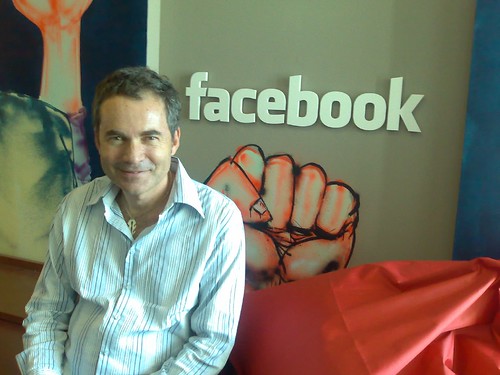
There are many reasons why I believe that Facebook will be worth over $10bn, maybe as much as $20bn but I will focus on one, its open immigration policy. Joanna Rees (CEO of FON USA) and I went to see the folks at Facebook in order to make a deal on how Fon could appear in Facebook. The visit was amazing in the sense that we basically learned that we could do whatever we wanted at Facebook. All our ideas were greeted with a yes, yes and yes.
Basically, the Facebook system resembles a country with open immigration in which the best are allowed to thrive, kind of like USA who manages to attract the best of the best…and thrives. But of course you have to live by certain rules like for example disclosing who you are, a rule that we also have at Fon and that while potentially hackable Facebook told us that they frequently delete accounts of people they believe are not disclosing their true identity. Interestingly Second Life has the opposite principle, namely that people would like to live in an imaginary world of second identities, and some do, but most like to have a real relationship with real friends.
To me there´s no doubt that Facebook will be hugely popular and will overtake Myspace sometime during 2008 and become the largest social network in the world. The only lingering doubts center around monetization but with Google nearby and with the famous Myspace Google deal as a starting point I see that selling ads to people who disclose their identity and so much about themselves will be like shooting fish in a barrel.
2007 24
Open Car System in San Francisco
Published by MartinVarsavsky.net in Open Source with No Comments
We should bring this to Europe!
2007 24
Beggars in San Francisco
Published by MartinVarsavsky.net in General with No Comments
I am staying at the very fashionable Clift Hotel in San Francisco. But as I come out of this hotel I find hundreds of homeless people, many of them begging and I have a hard time enjoying my walks. I lived in NYC for many years and there were as many beggars in NYC as they are here or more but now that I have spent 12 years in Madrid where I am hardly every approached by a beggar I cannot but wonder why begging is so common in the large cities of America. Think of it. This is a country who spent half a trillion dollars invading Iraq, some say with the best of intentions, others are not so sure. But even if the intentions were good I find it very hard to understand how the people who run this country do not see more fit spending half a trillion dollars providing health care and in general treating the bottom 20% of the population better. To me the richest countries in the world are not the countries in which the rich live better but the countries in which the bottom 20% lives better as if the botton 20% is not doing that badly then everyone else is doing very well. Many people in America and some in Europe criticize taxation in Europe but taxation in Spain is similar to that of USA and because we don´t spend so much money in the military we have so much more to spend in more reasonable endeavors.
2007 22
Undivided Attention is a Thing of the Past
Published by MartinVarsavsky.net in General with No Comments
I am at Supernova and as I watch almost all attendees work on the Internet while they “listen” to the speakers, I conclude that “undivided attention” is a thing of the past.
2007 22
Sansa Connect
Published by MartinVarsavsky.net in General with No Comments
I finally got my Sansa Connect and I think that the Sansa, while not a great gadget as of now, it is certainly the start of something great. My short review of it is that the gadget itself is extraordinary, compact, inviting, but as it is available now the Sansa Connect is only great if you love Yahoo´s music platform as it is geared to work and promote that platform. I have been a user of Yahoo Music for a couple of years now and while I have my Martinvars1 radio there, what I like most on the internet is freedom of choice and to me the best Sansa Connect is one that has Yahoo Music and LastFM, and Pandora, and whoever else I like. Now having said this, I do think it is worthwhile to buy the Sansa Connect because the Yahoo Service has access to most music that is available and it is great to have an ipod like device that “contains” most music you would ever want to listen to.
2007 22
At Supernova with AOL and Yahoo
Published by MartinVarsavsky.net in Internet & Technology with No Comments
I am at Supernova in San Francisco. I just spoke at a panel on social networks in which AOL and Yahoo were represented. AOL has over 100 million unique users, mostly in America. Yahoo has around 400 million uniques with USA being it´s number one country as well. And other than Flickr my guess was that most people in the audience did not use AOL, nor Yahoo. Also other than Flickr I could not see how any AOL or Yahoo properties benefit from the Web 2.0 effect, namely that your experience gets better on the net because somebody else is surfing the same site as well.
But if anything AOL and Yahoo were eye openers to me in the sense that I wonder how elitist many of the sites that I invest in are. Companies like Technorati, Netvibes, Joost and many others are much smaller than Yahoo and AOL and have little chance to ever catch up with them. So is the Web 1.0 just here to stay? Is the Web 2.0 a minority group that just looks huge to us because we live in it but it is tiny when all is taken into account on the internet? Or will AOL and Yahoo eventually evolved and make most of their experiences comunal? Hard to tell.
2007 21
Panel with Luc Montaigner and James Heckman
Published by MartinVarsavsky.net in General with No Comments
I just had the incredible opportunity of being in a panel at The International Economic Forum of the Americas conference with Luc Montagnier and James Heckman. The panel was on innovation and economic development and the debate centered around patents and whether patents promote economic development or not.
Although the panel went on for around 2 hours the summary of it is that Luc Montaigner, the co discoverer of the AIDS virus, was for patents and James Heckman, the Nobel prize in Economics, against. While Luc Montaigner made a good case as to why patents are needed in the field of medicine, James Heckman made the best case I had ever heard as to why patents mostly hurt development. When it was my turn I sided with Heckman, elaborating on the open source movement and how I oppose all technology related patents outside of medicine.
2007 20
FON goes to America
Published by MartinVarsavsky.net in Fon with No Comments
The FON US Team has just sent me this video as a suprise…and it’s hysterical. I also liked this one.